MONTREAL - For most of the world, English is just a
language. But for us Quebec anglos it’s a cause — an endangered dialect
we’re on a constant vigil to protect.
Take alert Gazette reader Beverly Cooper who recently sent me a picture of her latest French flyer from Linen Chest, where she quickly spotted two store locations had been francisized.
The LaSalle store was no longer on Boul. Newman but was now on Boul. Nouveauman.
The downtown store wasn’t on Rue Ste-Catherine anymore but on Rue Ste-Calesrine. Obviously the letters “the” in Ste. Catherine had been translated to the French word les.
So instead of Ste. Ca-the-rine, it became Ste. Ca-les-rine.
Don’t worry, everyone, it’s not the pasta police hunting down more English words — it’s just a computer translation program that messed up bad. Programs like Google Translate are becoming common and until they work out the kinks, we’ll see more crazy errors and linguistic foe paws … er, faux pas.
Rue Penfield will probably shows up on a flyer as Rue Stylo-champs, Atwater will become À L’eau and electronic traffic websites will warn us there’s a confiture de circulation up ahead instead of a traffic jam.
Meanwhile, in computer-translated French-to-English, Rue Maisonneuve will become Newhouse St., while N.D.G. becomes O.L.G. — Our Lady of Grace,
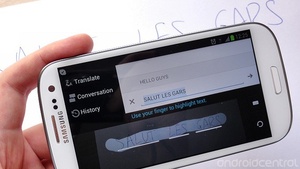
But like all gadgetry, electronic translation will improve quickly and I’m sure Google Translate will eventually crack the language barrier. In five years we’ll probably be able to point our phone at any French word and get a perfect English translation using some app.
A French ARRÊTE sign will translate into STOP right on your screen, while an English STOP sign will translate to the French STOP.
As well, the much talked-about new Google Glasses will soon let you see your computer screen right on your glasses — so you can surf online with voice commands as you walk down the street, or drive your car — or bungee jump while watching yourself live on YouTube.
Google has announced it’s looking for more uses for these glasses, so let me suggest an idea we could use here in Quebec to end Hassles 101 — with Google Glasses 1.01.
Why not install a program on the glasses that translates all French signs and words you see into English (or vice versa) the instant you see them? The signs would still be French to the naked eye, but you’d see them in English if you looked though your glasses. Frankly, there are times when I could use “English-coloured” glasses.
As I get older my eyesight is weaker and I sometimes can’t read English that, under Bill 101, is in smaller print than the French.
For instance, over at my pharmacy there’s a blood pressure machine with bilingual instructions — but the English version has smaller lettering. So before you have a blood pressure test you need an eye test, or a French test.
I now realize these small English letters discriminate against older people — exactly the pre-Bill 101 generation that needs to read them most.
It’s worse in restaurants where I occasionally need menu help — like at a Bâton Rouge where the lighting was so dim I could barely see the French lettering, let alone the tiny English. What the heck was aiglefin anyways — I’d forgotten? Not to mention macaroni à l’effiloché du porc?
Take alert Gazette reader Beverly Cooper who recently sent me a picture of her latest French flyer from Linen Chest, where she quickly spotted two store locations had been francisized.
The LaSalle store was no longer on Boul. Newman but was now on Boul. Nouveauman.
The downtown store wasn’t on Rue Ste-Catherine anymore but on Rue Ste-Calesrine. Obviously the letters “the” in Ste. Catherine had been translated to the French word les.
So instead of Ste. Ca-the-rine, it became Ste. Ca-les-rine.
Don’t worry, everyone, it’s not the pasta police hunting down more English words — it’s just a computer translation program that messed up bad. Programs like Google Translate are becoming common and until they work out the kinks, we’ll see more crazy errors and linguistic foe paws … er, faux pas.
Rue Penfield will probably shows up on a flyer as Rue Stylo-champs, Atwater will become À L’eau and electronic traffic websites will warn us there’s a confiture de circulation up ahead instead of a traffic jam.
Meanwhile, in computer-translated French-to-English, Rue Maisonneuve will become Newhouse St., while N.D.G. becomes O.L.G. — Our Lady of Grace,
But like all gadgetry, electronic translation will improve quickly and I’m sure Google Translate will eventually crack the language barrier. In five years we’ll probably be able to point our phone at any French word and get a perfect English translation using some app.
A French ARRÊTE sign will translate into STOP right on your screen, while an English STOP sign will translate to the French STOP.
As well, the much talked-about new Google Glasses will soon let you see your computer screen right on your glasses — so you can surf online with voice commands as you walk down the street, or drive your car — or bungee jump while watching yourself live on YouTube.
Google has announced it’s looking for more uses for these glasses, so let me suggest an idea we could use here in Quebec to end Hassles 101 — with Google Glasses 1.01.
Why not install a program on the glasses that translates all French signs and words you see into English (or vice versa) the instant you see them? The signs would still be French to the naked eye, but you’d see them in English if you looked though your glasses. Frankly, there are times when I could use “English-coloured” glasses.
As I get older my eyesight is weaker and I sometimes can’t read English that, under Bill 101, is in smaller print than the French.
For instance, over at my pharmacy there’s a blood pressure machine with bilingual instructions — but the English version has smaller lettering. So before you have a blood pressure test you need an eye test, or a French test.
I now realize these small English letters discriminate against older people — exactly the pre-Bill 101 generation that needs to read them most.
It’s worse in restaurants where I occasionally need menu help — like at a Bâton Rouge where the lighting was so dim I could barely see the French lettering, let alone the tiny English. What the heck was aiglefin anyways — I’d forgotten? Not to mention macaroni à l’effiloché du porc?
Most challenging was a St. Denis St. menu where I recently faced this
dish: Magret et jambonneau de la Canardière, soubise d’oignons grillés,
cardamine carcajou, pleurotes érigées et faisselle de chèvre maison.
Sure, I could have asked for an English menu, but that’s embarrassing in your own hometown. So I held the menu close to a candle trying to read the miniscule English translation — until I saw it was singed by flames.
But my Google Glasses idea could solve all this instantly by translating any dish for you in big computer print. Imagine! There’d be no more Bill 101 hassles for anyone. American tourists could to go St. Dennis Street to a restaurant called The Express — and order the steak-fries and caramel cream.
Francophones could translate pasta into pâtes, or hamburger into hambourgeois.
The same would go for street signs. Most streets would be in French to your naked eye but a fast glance in your glasses would get you a translation. So Ave. des Pins would become Pine, St. Jacques would become St. James and Ste. Calesrine would become Ste. Catherine.
Montreal would keep its French look but we’d have a private English version, too. Everyone would be happy! We could end the sign law debate once and for all — and more.
To read this column in French please use Google Glasses, version 1.01 français.
Voilà!
Merci.
joshfreed49@gmail.com
Sure, I could have asked for an English menu, but that’s embarrassing in your own hometown. So I held the menu close to a candle trying to read the miniscule English translation — until I saw it was singed by flames.
But my Google Glasses idea could solve all this instantly by translating any dish for you in big computer print. Imagine! There’d be no more Bill 101 hassles for anyone. American tourists could to go St. Dennis Street to a restaurant called The Express — and order the steak-fries and caramel cream.
Francophones could translate pasta into pâtes, or hamburger into hambourgeois.
The same would go for street signs. Most streets would be in French to your naked eye but a fast glance in your glasses would get you a translation. So Ave. des Pins would become Pine, St. Jacques would become St. James and Ste. Calesrine would become Ste. Catherine.
Montreal would keep its French look but we’d have a private English version, too. Everyone would be happy! We could end the sign law debate once and for all — and more.
To read this column in French please use Google Glasses, version 1.01 français.
Voilà!
Merci.
joshfreed49@gmail.com
© Copyright (c) The Montreal Gazette